 Shoopy
 How Ladachi Kulfi runs multi-location commerce
How Ladachi Kulfi uses Shoopy for location-based ordering, store-level inventory, consistent pricing, order routing and settlements across around 25 outlets.
- Business
- Ladachi Kulfi
- Sector
- Frozen desserts · multi-location retail
- Outlets
- Around 25
- Online store
- One, for the whole network
- Shoopy features used
- Store-level inventory · Location-based ordering · Order routing · Head-office oversight · Per-outlet settlement
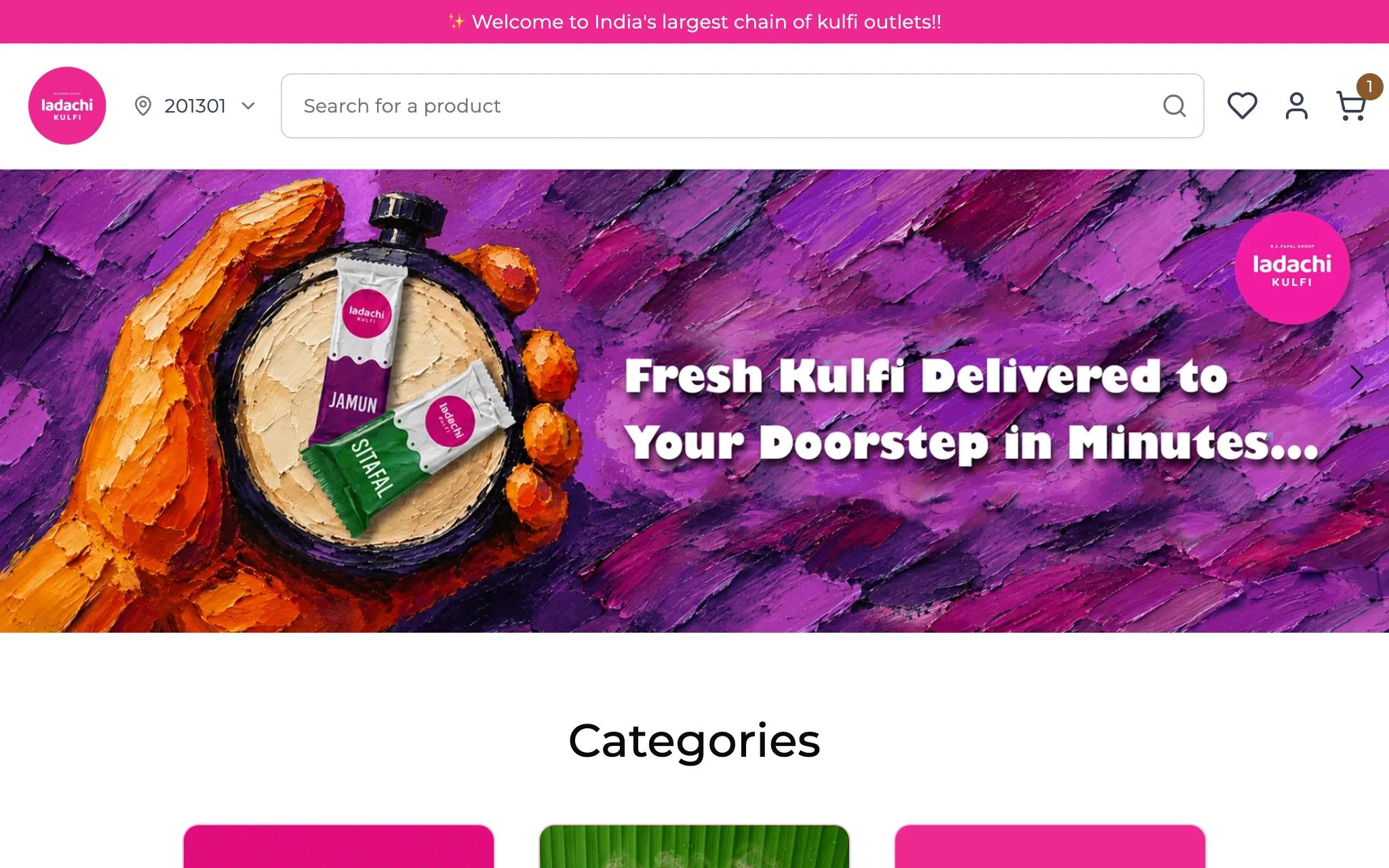
Ladachi Kulfi sells kulfi — Indian frozen dessert — through around 25 outlets. All of them share one Shoopy online store. Each outlet holds its own stock. Prices stay the same across the brand. A customer orders from the outlet that serves their area, that outlet fulfils the order, and head office takes over when an outlet cannot fulfil it.
Head office controls pricing and the customer experience. Each outlet controls its own stock and fulfilment.
The problem: one brand, around 25 outlets
Ecommerce for a business with many outlets is a different problem from ecommerce with one warehouse or one shop. Ladachi Kulfi’s online store had to handle all of this at once:
- Each outlet holds its own stock, so the products on sale can differ from outlet to outlet.
- Prices must stay the same everywhere.
- A customer should order from an outlet that can actually reach them.
- One order should not split across two outlets.
- Head office needs a way to take over when an outlet cannot serve an order.
- The money from each order must reach the right outlet.
A standard online store keeps one stock count for the whole business. That does not match how Ladachi Kulfi operates. Shoopy’s multi-location setup lets the online store work the same way the physical business works.
Store-level inventory, one price list
Every Ladachi Kulfi outlet manages its own stock in Shoopy. Customers see one brand online, but what they can order depends on the stock at the outlet serving their area.
Prices are set centrally and stay consistent across the network.
That separation is the core of multi-store inventory management on Shoopy: stock is local, pricing is central. Each outlet keeps its own stock count accurate. Every outlet shows the customer the same price.
The stock model is the same one described on our multi-store retail page: one catalogue, stock counted per location.
How does location-based ordering work?
When a customer opens the Ladachi Kulfi store, what they see depends on the area they are in:
- The customer opens the store and sets their delivery pincode.
- Shoopy matches that pincode to the outlet that serves the area.
- The store shows that outlet’s products and stock.
- The customer places the order.
- The same outlet prepares and fulfils it.
The customer sees only products their local outlet can deliver. This is location-based ecommerce at its simplest: the store shows what the nearest outlet can sell. It matters most for fresh products that need quick local delivery. Kulfi is a good example.
One order belongs to one outlet
Once the serving outlet is set, the cart belongs to it. A single order cannot mix products from two outlets.
That one rule keeps fulfilment simple. It avoids:
- Split deliveries
- Two settlements for one order
- Wrong stock counts
- Confusion over which outlet is responsible
The customer sees one simple Ladachi Kulfi order. Inside the system, Shoopy records which outlet is responsible for that order.
Order routing: straight to the serving outlet
A placed order goes directly to the outlet chosen for that customer. That outlet prepares and serves it. Online orders do not pass through a central warehouse first.
One website reaches every customer. The nearest outlet delivers quickly. Every outlet sells online directly.
What happens when an outlet cannot fulfil an order?
Sometimes an outlet cannot serve an order it was given. Every retail business needs a plan for this.
In Ladachi Kulfi’s setup, that order returns to head office. Head office decides what happens next: fulfil it centrally, or assign it to another outlet.
- Normal path: customer → assigned outlet → outlet fulfils.
- Exception path: customer → assigned outlet → cannot fulfil → head office → fulfil centrally or reassign.
Head office handles the exceptions and leaves the everyday orders alone.
What stays local, what stays central
The Ladachi Kulfi model shows a useful principle of multi-store ecommerce: head office sets the rules, and the outlets do the daily work.
Each outlet manages:
- Its own stock
- The orders assigned to it
- Its own fulfilment
Head office keeps:
- The price list
- The brand and store experience
- Order exceptions and reassignment
- The settlement rules
Settlement between outlets and head office
Sending the order to the right outlet is only the first step. The money must also reach the right outlet.
In Ladachi Kulfi’s setup, the money from each order goes to the outlet that fulfilled it, and head office keeps its agreed share of the order.
So Shoopy tracks more than “this order belongs to Ladachi Kulfi” — it tracks which outlet each order and its payment belong to. That makes the model workable for networks where each outlet or franchise partner earns from its own online orders.
One store for the customer, many outlets behind it
The customer sees one website, one brand, one catalogue, one cart, one order. Behind that one store, Shoopy manages every outlet: its stock, the shared price list, outlet selection by area, order routing, exceptions and settlement.
The physical network and the online store run as one system.
Who this model fits
The same setup works beyond desserts: grocery chains, pharmacies, restaurant brands, electronics retailers, fashion chains, franchise networks — any business that keeps stock in several outlets and serves customers from the nearest one.
The useful question is not “do you have an online store?” It is: “does your online store know which outlet should serve each customer?”
If that is your kind of business, Shoopy is a multi-location ecommerce platform that can support the same setup: store-level inventory, location-based ordering, order routing and central oversight. Multi-location support comes with the Business plan.
Running more than one outlet? Book a demo and we will show you the setup on a call.