 Shoopy
Does a D2C brand in India need its own mobile app? Retention and repeat purchases (2026)
Not at first. A D2C brand in India needs its own app once repeat buyers place a real share of its orders. What the data says, and how to check your own numbers.
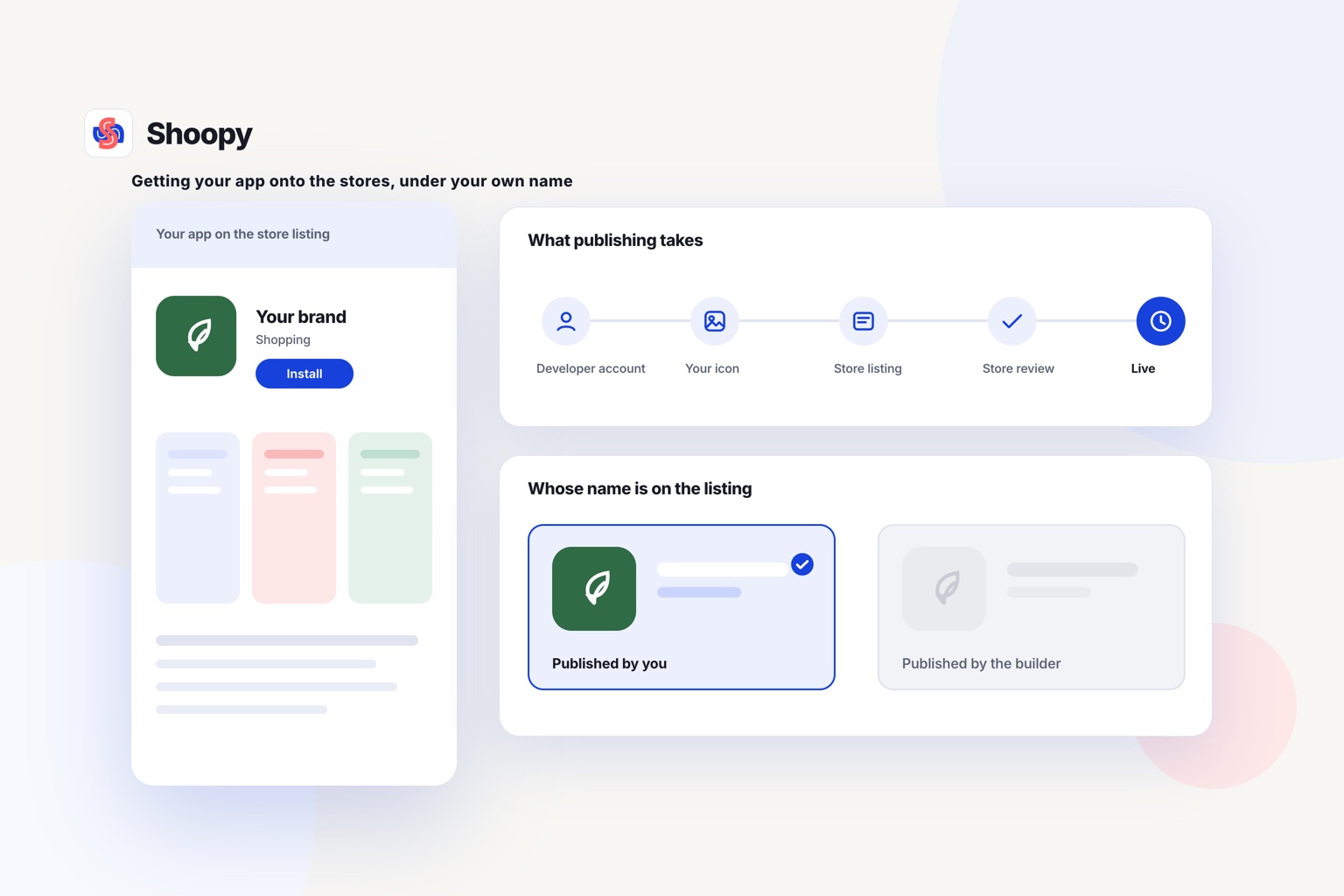
Quick Answer: No, not at first: a D2C brand needs its own mobile app once repeat buyers place a real share of its orders. Baymard rates 46% of mobile apps “mediocre” or worse at checkout, against 63% of mobile sites. Only buyers who install the app get that checkout. If you build one, Shoopy builds it from your store’s catalogue, and it is published under your own name.
A D2C (direct-to-consumer) brand sells its own products to buyers from its own store, not through a marketplace. Its own mobile app is a shopping app under the brand’s name on Google Play and the App Store.
The answer to “does my brand need an app” depends on one number: the share of orders that come from repeat buyers. This guide shows when an app is worth building, and what to fix before you build one.
Why does repeat buying decide whether a D2C brand needs an app?
An app serves only the buyers who come back, so your own repeat order rate decides, not an industry average. A repeat order rate is the share of all orders placed by someone who had bought from you before.
How often people reorder depends on what you sell. A direct-to-consumer (DTC) brand selling coffee, skincare refills or pet food gets more repeat orders than one selling furniture or wedding wear, so two brands of the same size can need very different answers.
What this means for an app
An app reaches only the people who install it. A first-time buyer has little reason to keep your app on a crowded phone. A buyer who orders every month does have a reason.
So an app serves repeat buying that already exists. Do not expect it to create repeat buying on its own.
Do apps check out better than mobile websites?
Yes, in Baymard’s ratings of checkout design at leading US and European ecommerce sites, apps score better. Checkout is the set of steps from cart to payment. Baymard’s benchmark covers US and European sites, not Indian stores, so read the figures below as a direction, not as your own numbers, and check your own repeat rate against them.
As of its 2025 checkout user experience benchmark, Baymard rated 63% of mobile sites “mediocre” or worse at checkout. For mobile apps, the figure was 46%. Only 2% of mobile sites rated “good”, against 7% of apps.
The same Baymard page cites a Baymard survey of 1,026 US adults who had shopped online in the last 3 months. 18% of them reported abandoning an order because they did not want to create an account.
Why the gap matters less for new buyers
An app starts with an advantage: a repeat buyer is often already signed in, with a saved address. But that advantage belongs to people who installed the app. A first-time buyer from an ad still lands on your mobile website.
So new buyers reach you through the mobile website either way. Fix its checkout first, then add the app for the buyers who return.
Does my brand need an app, or a better mobile site first?
A better mobile site comes first for a new brand, because every new buyer passes through it. The app comes once regular buyers want a quicker way back.
Read the table against your last six months of orders.
| Signal in your orders | What it suggests |
|---|---|
| Most buyers have ordered once | Fix the mobile site and your follow-up messages first |
| Your product runs out and gets rebought, such as skincare or food | An app can make the reorder quicker |
| Repeat buyers place a growing share of orders each quarter | An app is worth planning now |
| Buyers drop off at the payment step on mobile | Fix the mobile checkout before any app |
| You sell one item that lasts for years | An app adds little; spend on the website instead |
When should you build the app?
Plan the app when three things are true at the same time. Buyers reorder within weeks, repeat buyers place a rising share of orders, and the mobile checkout already works. Then the app gives those buyers a shorter path back and a way to follow their order.
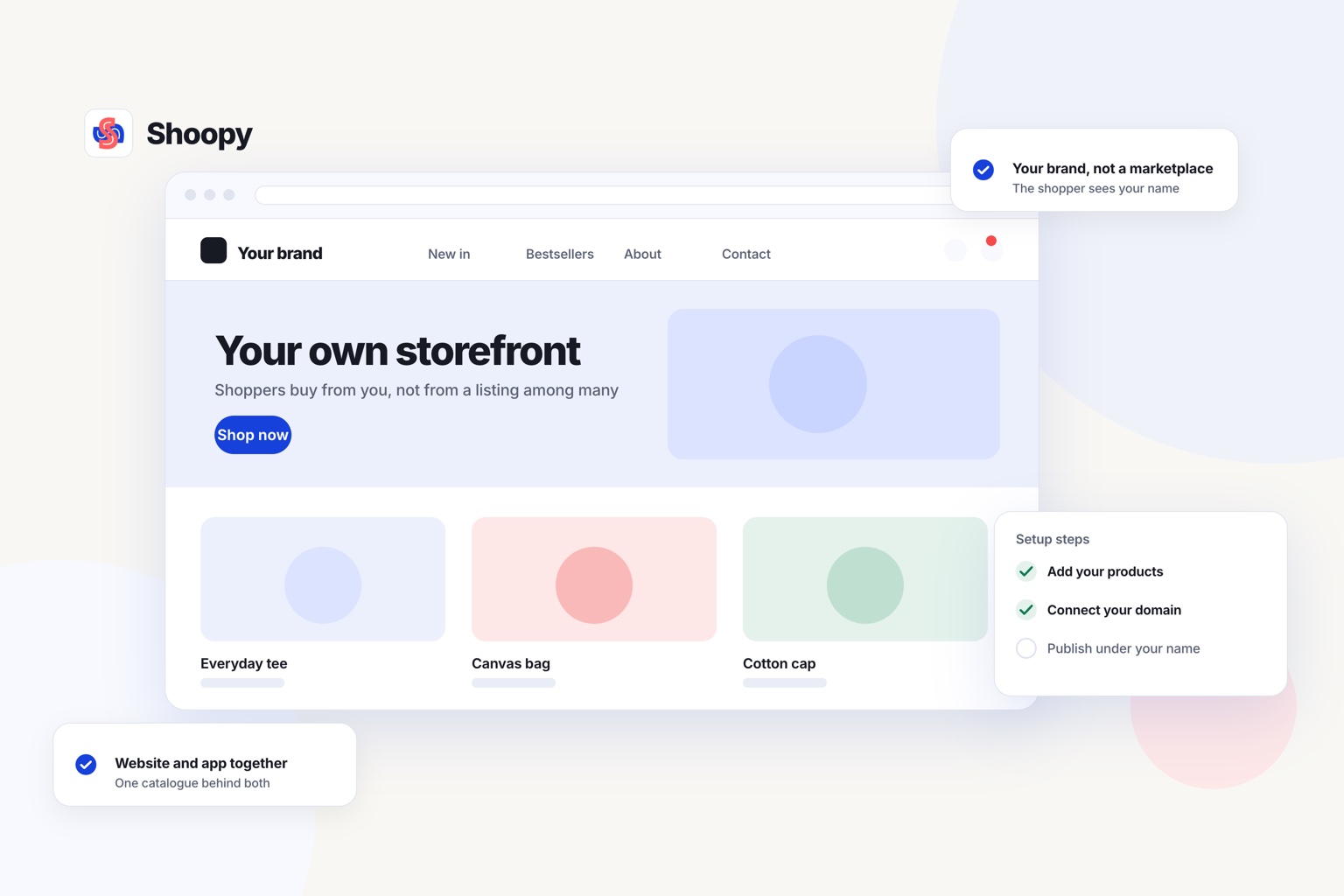
You do not need a separate website and app team to start. A storefront on your own domain can come first, with the app added later on the same catalogue.
How do you check your repeat purchase rate before you decide?
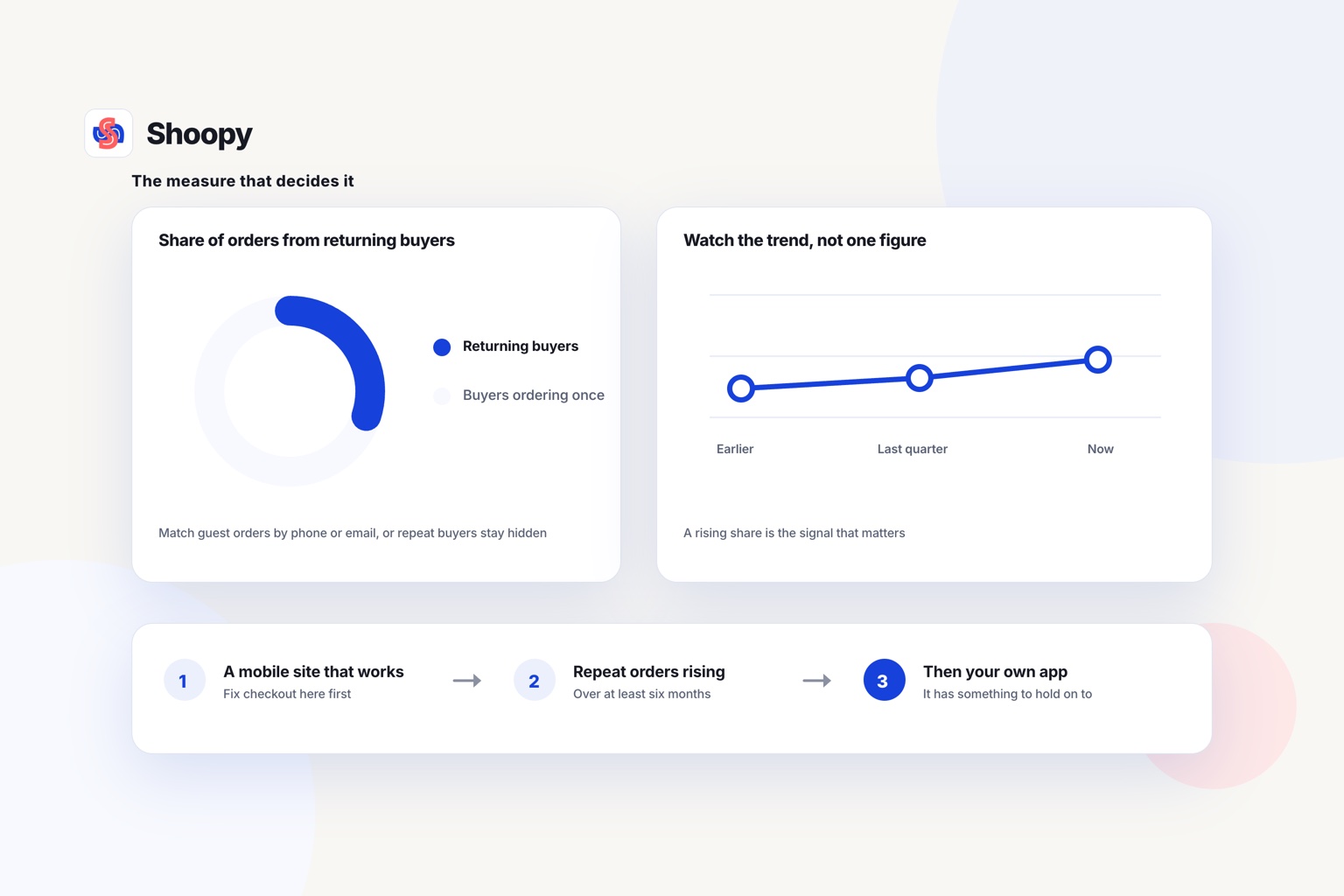
Divide the orders placed by returning buyers by all orders, over the same period. Use at least six months, so one sale week does not skew it.
- Export your orders. Take every order with the buyer’s phone number or email and the order date.
- Mark the returning buyers. Any order from a buyer who had an earlier order counts as a repeat order.
- Work out the rate. If 300 of 1,000 orders came from returning buyers, your repeat order rate is 30%.
- Watch the trend, not one figure. Compare this quarter with the last two. A rising share is the signal that matters.
- Check the time between orders. If repeat buyers come back every few weeks, an app has more chances to be opened.
Guest orders can hide repeat buyers, because they carry no account. Match them by phone number or email before you trust the rate.
Reading the result
A low rate is not always a bad sign. A brand that adds many new buyers each month will show a lower share of repeat orders, because the new buyers grow the total. So compare groups of buyers who first ordered in the same month, quarter by quarter.
Which mistakes come from launching an app too early, and how do you stop them?
Three mistakes are worth planning for: building the app before the website works, counting installs instead of orders, and expecting every app to show notifications.
The website still loses buyers
A brand builds an app while its mobile checkout still drops buyers. New buyers never reach the app. Test your mobile checkout on a low-cost phone and on mobile data before you plan an app.
Installs are counted, orders are not
An install is not a sale. Track how many app users place a second order, and compare that with buyers who use only the website. If the two numbers match, the app is not yet adding orders.
Notifications do not reach everyone
iPhones and newer Android phones ask the buyer before an app may show notifications. Apple’s guidance for app developers says an app must get permission first, and suggests asking in context, not at first launch. Android’s developer documentation says a newly installed app’s notifications are off by default on Android 13 and later.
So ask at a useful moment, such as after the first order, and say what the buyer will get.
For a fuller checklist of the launch itself, read what to know before launching a shopping app.
What should the app do for repeat buyers?
It should make the next order quicker and show buyers where their current order is. Everything else is secondary for a D2C brand.
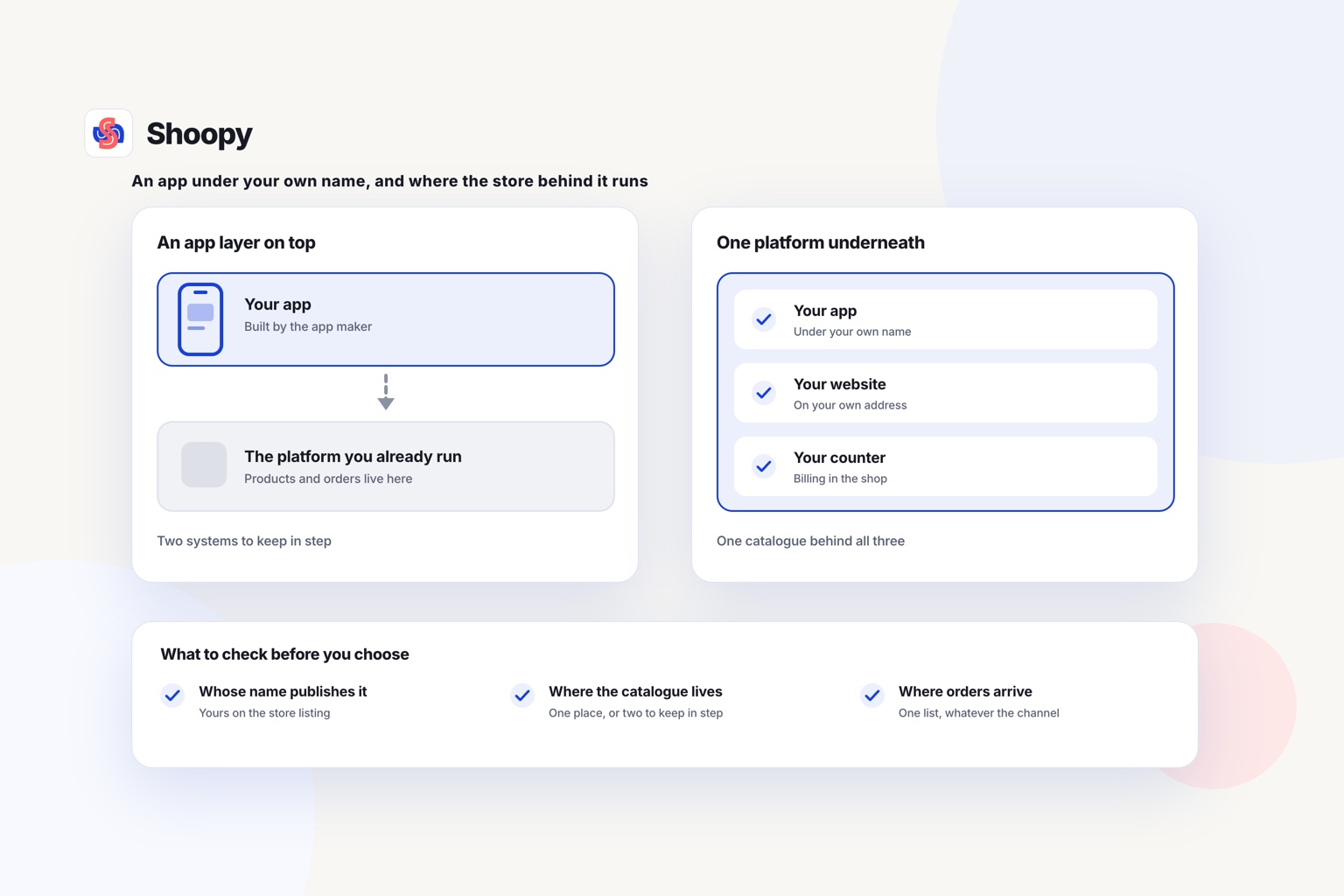
A Shoopy branded app carries your brand’s name on Google Play and, on plans with an iOS app, on the App Store. It reads the same catalogue, stock and orders as your website, so a price change is made once. Buyers can follow their order with live tracking inside the app.
Push notifications are available depending on your plan, for launches and restocks. Plans and current prices are on the pricing page.
Keep the other channels working
The app should not replace your other ways of reaching buyers. A buyer without the app still needs a reminder when a cart is left behind. WhatsApp cart reminders reach buyers who never install the app.
What if your store runs on another platform?
The branded app is your Shoopy store in app form, not a separate app product. If your store runs on another platform and you plan to stay there, a builder that connects to that platform fits better.
To see the website, apps and orders together, read the overview for D2C brands on Shoopy.
Frequently asked questions
What is a D2C app?
A D2C app is a shopping app that a direct-to-consumer brand publishes under its own name. Buyers install it from Google Play or the App Store and order from the brand directly. It reads the brand’s own product list, so the brand keeps the buyer’s details and order history.
What is a good repeat purchase rate for a D2C brand?
There is no single good figure, because it depends on how often people need what you sell. Compare your rate with your own last two quarters instead. A rate that rises each quarter matters more than any published average, and a brand that sells refills should expect a higher rate than one that sells durable goods.
Does an app replace WhatsApp and email for repeat orders?
No. An app’s notifications reach only buyers who installed it and allowed them, and they are off by default for new installs on Android 13 and later. WhatsApp and email can reach every buyer on your customer list who agreed to hear from you, including one-time buyers. Keep cart reminders and order messages running on those channels after the app launches.
Should a new D2C brand launch its website and app together?
Usually not. A new D2C brand has few repeat buyers, so few people would install the app. Launch the website first and get its mobile checkout working well. Plan the app for Google Play and the App Store once returning buyers place a steady share of orders, measured over at least 2 quarters.
What should you measure in the first month after launch?
Three numbers, and installs is not one of them. The share of orders that came through the app, how many buyers ordered a second time in it, and how many people opened it after the first week. Installs without a second order mean the app has not changed anything yet.