 Shoopy
 Which ecommerce platforms include branded Android and iOS apps?
Most platforms need a separate app builder at hundreds of dollars a month. A comparison of the platforms that build your branded Android and iOS apps in, read August 2026.
“Ecommerce platform with a mobile app” hides two very different products behind one search. Some platforms build a branded Android and iOS app for your store as part of a plan. Most do not — they run your website, and the app comes from a separate app-builder subscription or a development agency. The difference is thousands of dollars a year, so it is worth being precise about who does what.
If your search was “ecommerce platform with website and mobile app”, this is the question it comes down to: which platforms give you the website and the mobile app from one plan, and which need a second product for the app.
Everything below is read from each platform’s own public pages in August 2026. Prices change; check the linked pages before you decide.
The three routes to a branded shopping app
- Built into the platform. The platform that runs your store also builds your app. One catalogue, one stock count, one order list behind the website and the app, and one vendor to deal with.
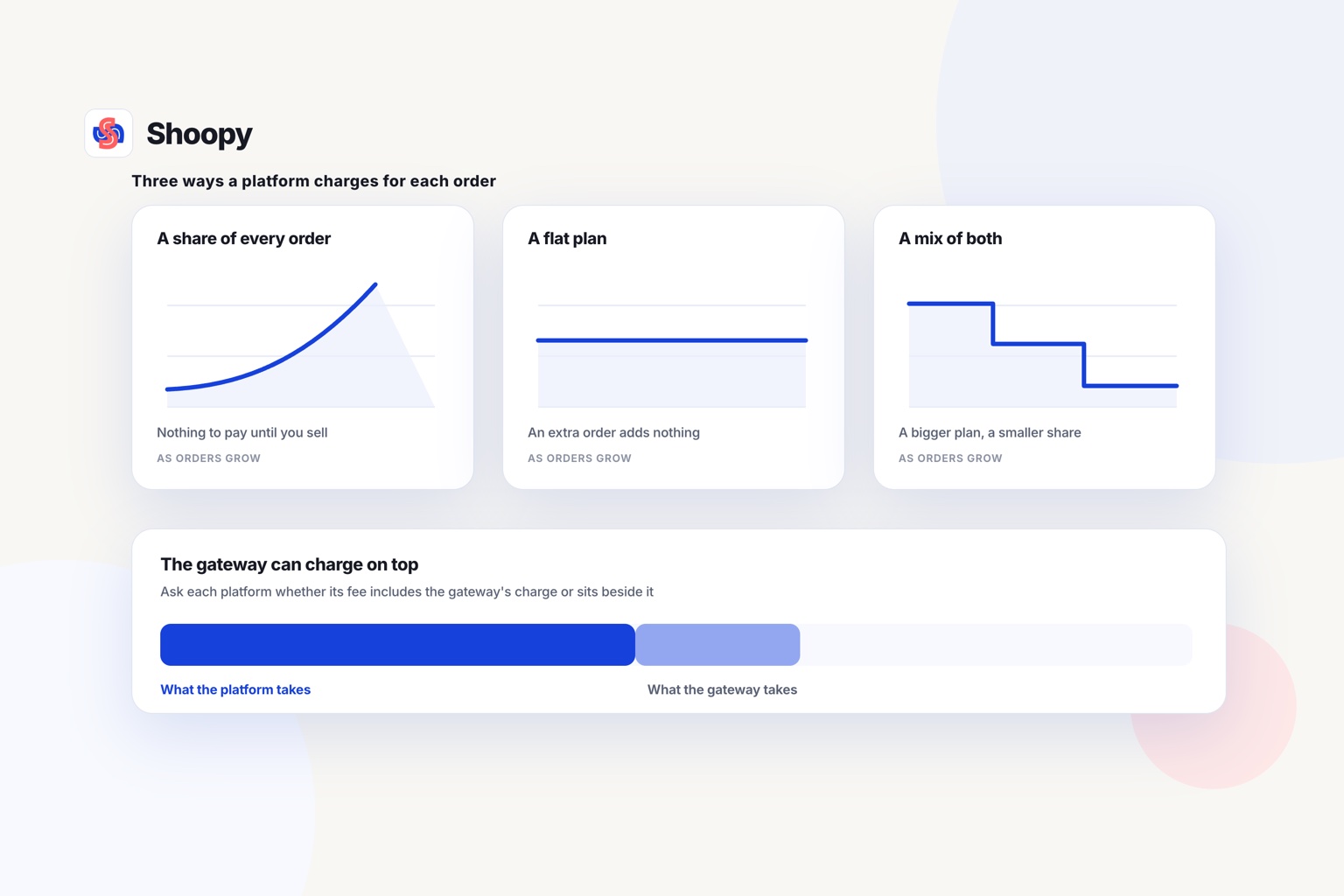
- An app-builder add-on. Your platform runs the website; a separate product turns the store into an app. Tapcart, the best-known builder for Shopify stores, starts at $500 a month ($400 a month billed annually) — on top of the Shopify plan, plus the Apple developer account ($99 a year) and the Google Play account ($25, one time).
- Custom development. An agency builds a native app against your platform’s APIs. You control everything, and you also maintain everything — two codebases, every store-policy change, forever.
Shopify and WooCommerce, the two biggest names a search will return, are route two or three: neither builds a branded customer app for your store itself. That is not a criticism — it is just the answer to the question this article is about.
What “built-in” should actually mean
Before comparing names, four checks separate a real built-in app from a web page in a wrapper with your logo on it:
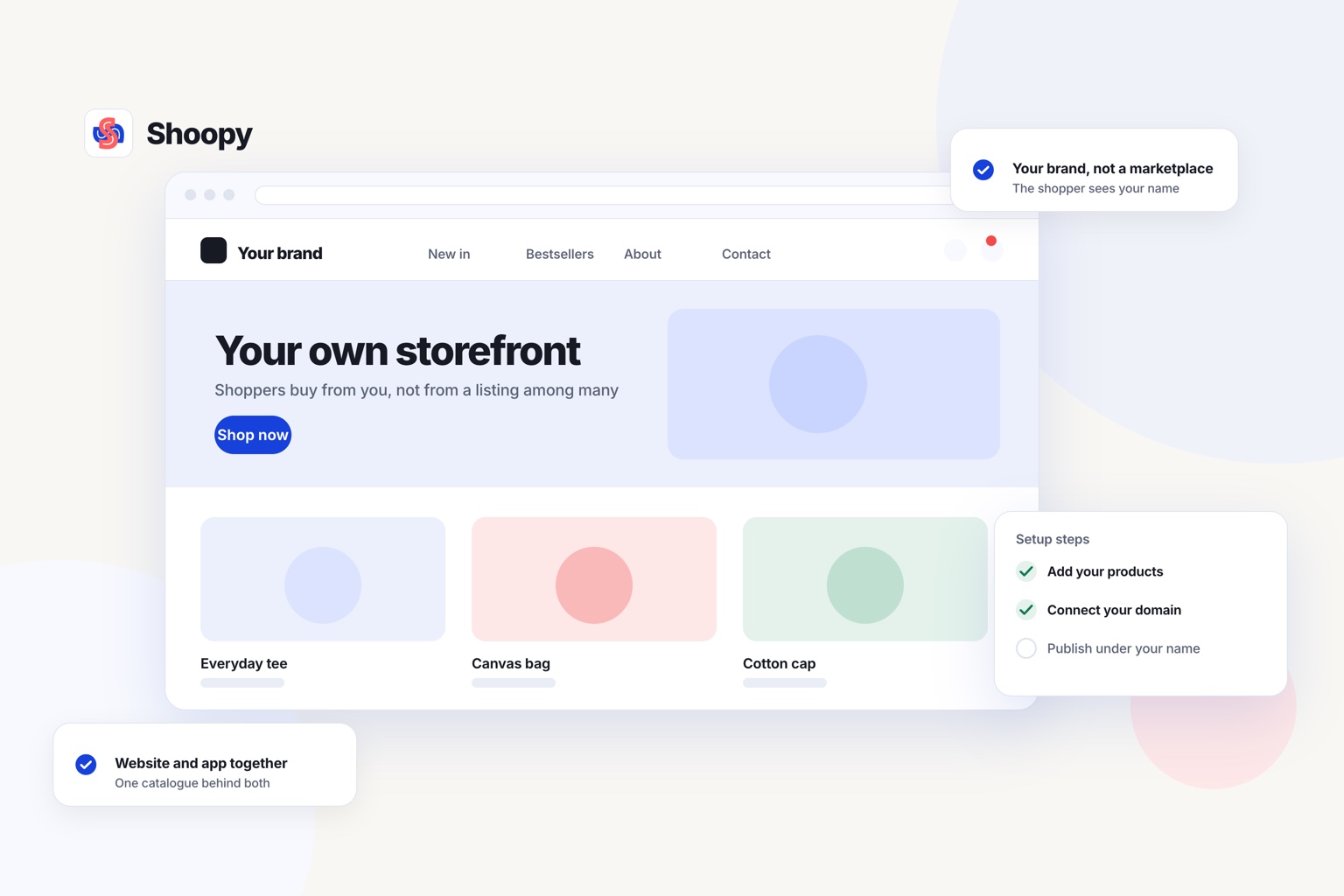
- One catalogue. The app reads the same products, stock, prices and orders as your website — not a copy you keep in sync by hand.
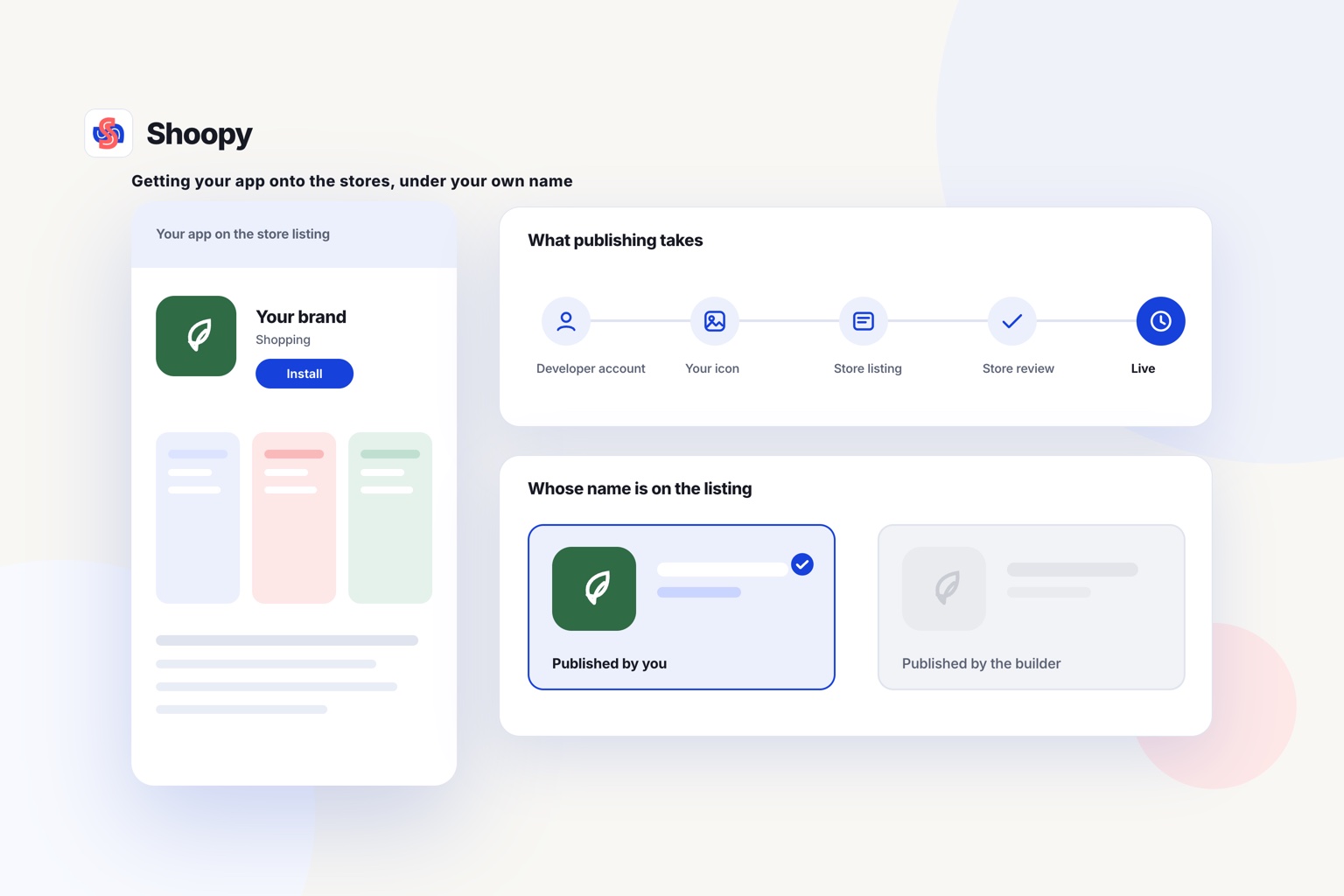
- Your name on the listing. The Play Store and App Store listings carry your brand, and the developer account is yours, so the listing stays with you if you ever leave.
- Both stores, stated per plan. Android and iOS are often separate line items. Read the plan table, not the headline.
- Publishing and updates. App stores change their rules constantly. Ask who submits the app, who keeps it compliant, and what that costs.
We wrote a fuller checklist in What to know before launching a shopping app.
Platforms that build the app in
Shoopy
Shoopy is an India-first ecommerce platform where the branded app is part of the plan ladder: the Android app is built on the Professional plan and above, the iOS app on the Business plan and above, each under your own brand name, icon and colours. The app reads the same catalogue, stock and orders as your website and your counter billing, and push notifications carry no per-message fee. Publishing to the stores — and keeping the app updated as store rules change — is an add-on billed yearly, submitted under your own developer identity so the listing stays yours. Plan-by-plan detail is on the pricing page and the your own app page.
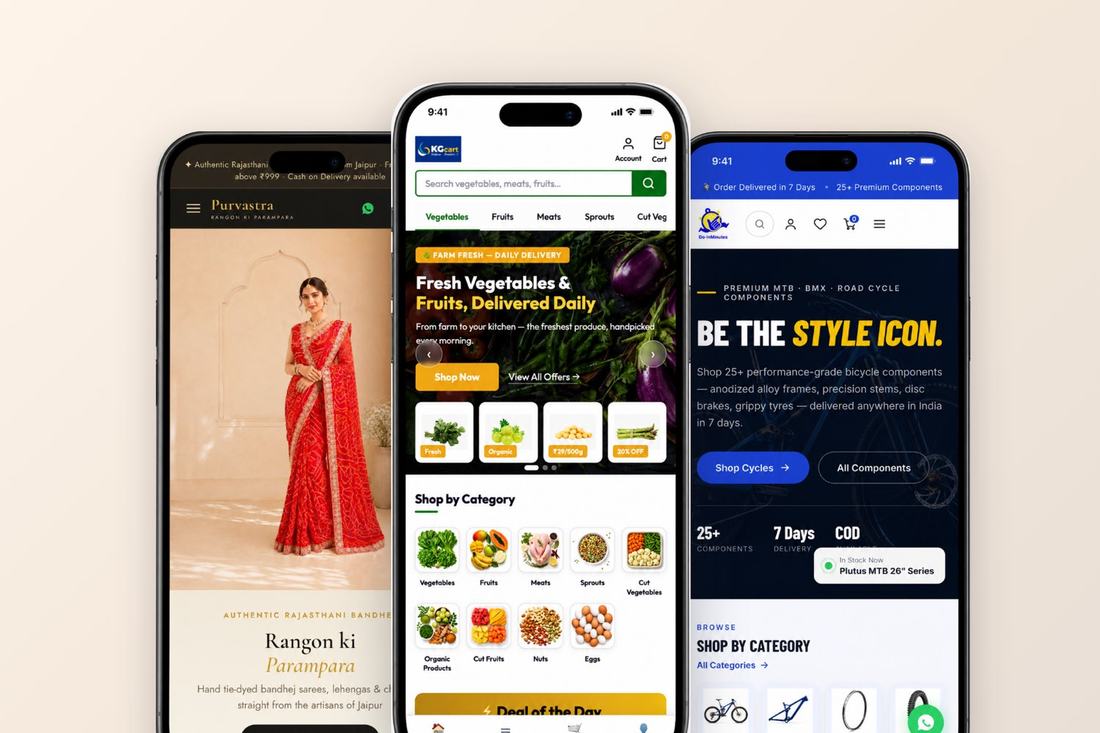
Two live examples: Grosale, a grocery brand, runs its branded Android app built on Shoopy, and Perfume2Spray, a fragrance D2C brand, sells through its Shoopy website and branded Android app.
Shopaccino
Shopaccino, another Indian platform, states on its site that native Android and iOS apps — with store listings, push notifications and real-time sync with the website — are included on its growth-tier plans with no separate app fee.
StoreHippo
StoreHippo includes a mobile-apps builder for Android, iOS and progressive web apps on its higher plans. Its own FAQ describes the apps as hybrid and fully customisable, and it offers separate buyer and seller apps — a point of difference from platforms that build store-native apps.
Growcify
Growcify, aimed at India and South Asia, describes its offering as a branded Android and iOS app, a website and a counter POS that stay in sync, with plans priced on its site.
A note on Dukaan, which searches often surface for India: its public pages describe merchant apps for managing the store, but as of August 2026 we could not find a branded customer app listed on its plans. If you are considering it, ask directly.
The cost logic, side by side
The builder route prices in dollars per month; the built-in route prices the whole platform per year. Two checkable figures make the shape of the decision clear:
| Route | What you pay | What it covers |
|---|---|---|
| Shopify + Tapcart | Tapcart from $500 a month, plus the Shopify plan | The app only — the store is priced separately |
| Shoopy Business plan | $499 for the first year on the international price list (renews at $349), plus the yearly publishing add-on | The whole platform: store, iOS and Android apps, counter billing, inventory, orders |
Indian pricing for Shoopy is in rupees on the pricing page, with every plan’s app inclusions stated per plan. The comparison is not “Tapcart is bad” — for a large Shopify store it is a serious product. It is that a builder subscription alone can cost more per month than an entire India-first platform costs per year, and a growing store should know that before choosing its stack.
How to decide
- Already on Shopify or WooCommerce with real volume? An app builder or an agency is your route; budget for it as a second product.
- Choosing a platform now, and the app matters? Prefer a platform that builds the app in — one catalogue, one vendor, one bill — and check our four “built-in” tests above against its plan table.
- Selling in India, Nepal or the UAE? That is Shoopy’s home ground. See how the branded app works, what D2C brands run on it, or book a demo and look at the app with your own products in it.